
Understanding Mycoprotein
From production to performance — everything you need to know.
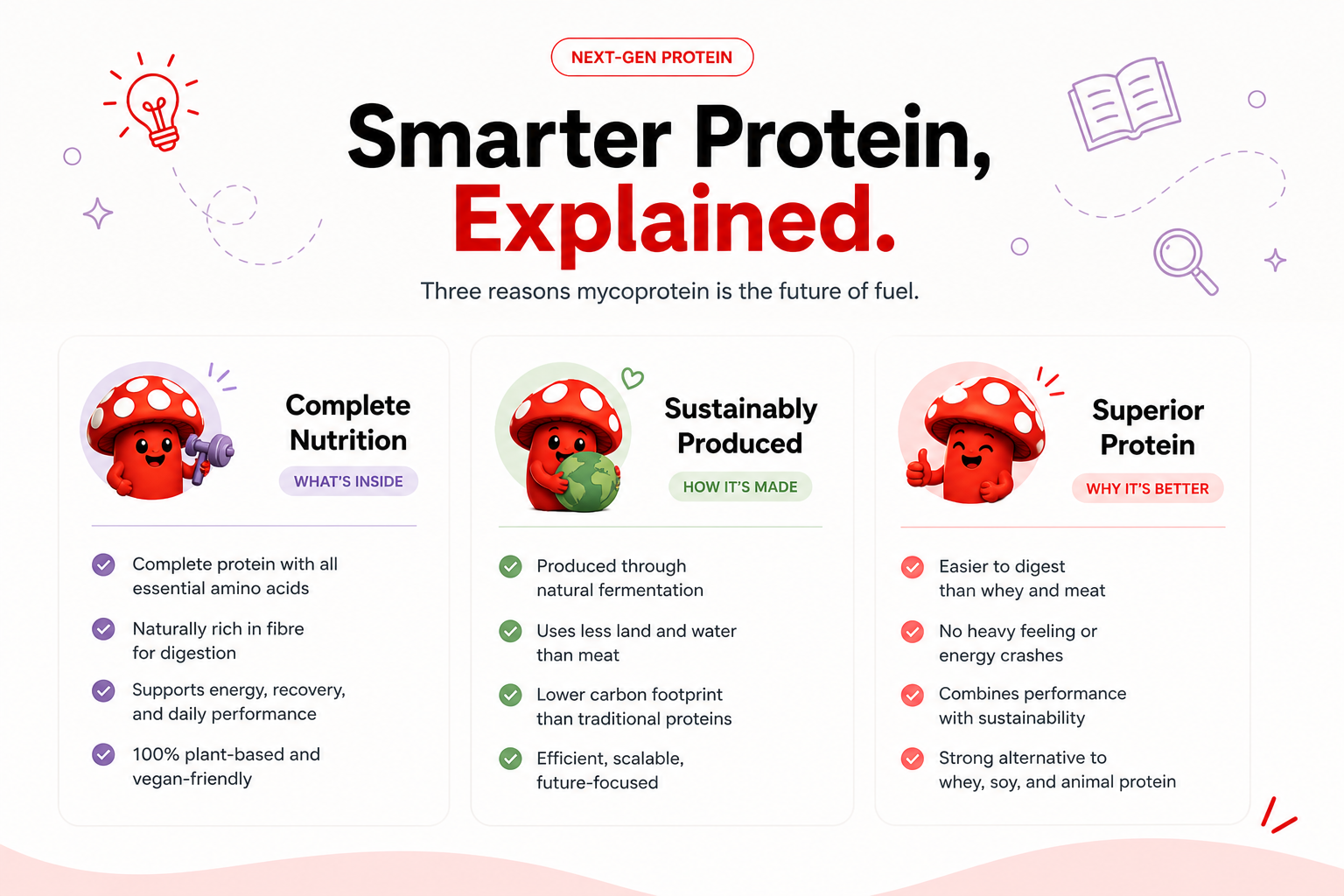
Mycoprotein, Shmycoprotein... WTF actually is it?

Despite the complicated name, mycoprotein is actually pretty simple.
It’s a protein created through natural fermentation using fungi — a process humans have used for centuries in foods like yoghurt, sourdough, and soy sauce. In controlled environments, the fungi naturally grow into a nutrient-rich protein source packed with essential amino acids and fibre.
While the science may sound futuristic, the process itself is surprisingly natural.
Unlike traditional animal protein production, mycoprotein can be produced using significantly less land, water, and energy, making it a smarter and more sustainable way to create high-quality protein.
Wait… So it's more processed than regular protein?
Actually, not really.
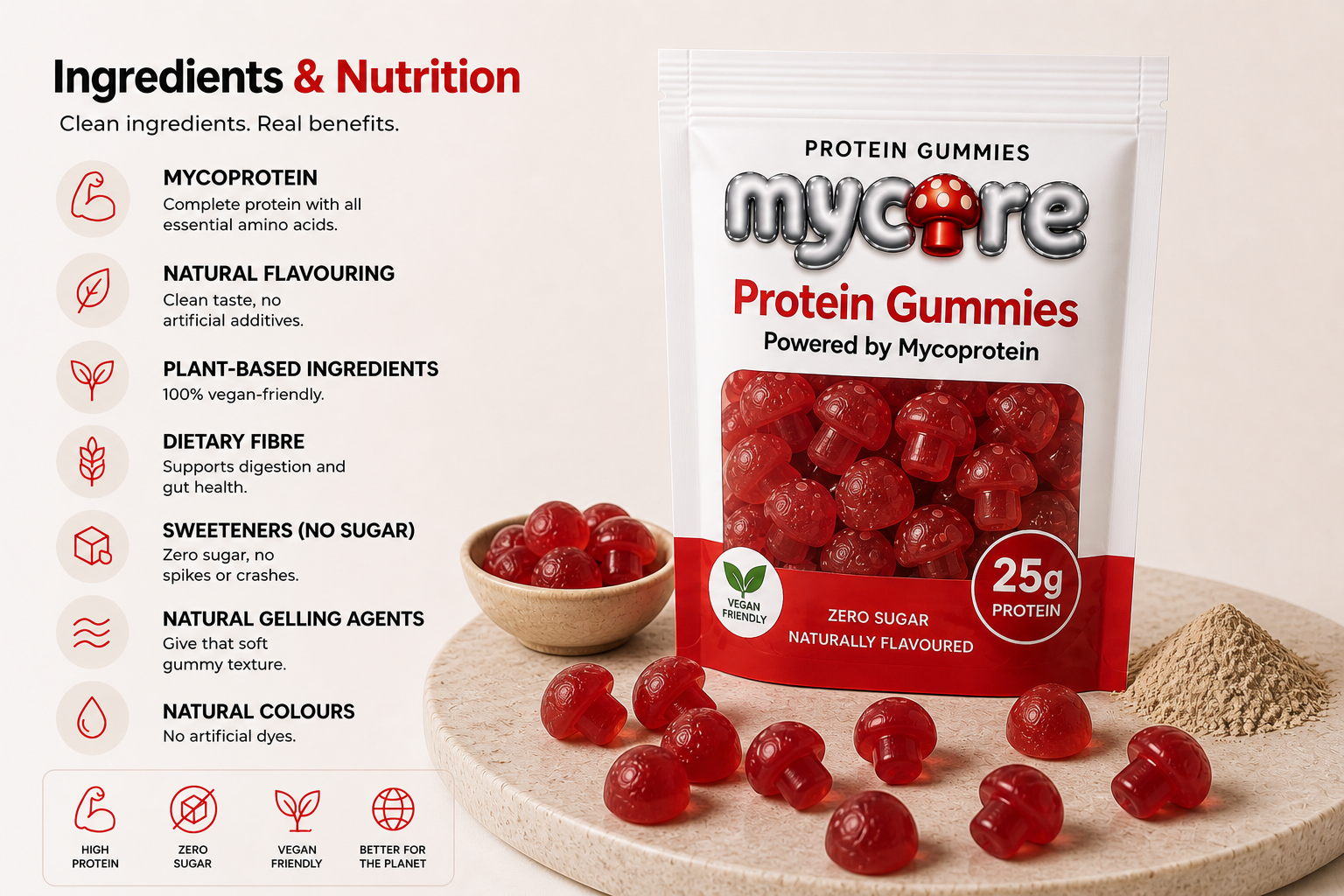
A lot of modern protein snacks and supplements rely on highly refined powders, artificial flavouring systems, excess sugars, and heavily processed ingredients to achieve their texture and taste. Mycoprotein takes a different approach.
Because it’s naturally grown through fermentation, mycoprotein already contains complete protein, fibre, and nutrients before extra processing is needed. That means fewer unnecessary additions and a cleaner overall ingredient profile.
The result is a protein source designed to feel lighter, easier to digest, and less artificial — while still delivering the performance benefits people expect from modern nutrition.


Production & Sustainability
Mycoprotein is produced through natural fermentation, using significantly less land, water, and energy than traditional protein sources like meat. The process is efficient and scalable, resulting in a lower carbon footprint while maintaining consistent quality.
Comparison to Other Protein Sources
Compared to whey, soy, and meat-based proteins, mycoprotein offers easier digestion, lower environmental impact, and a plant-based alternative without sacrificing performance.